Georg Luif, Experimental Game Cultures, University of Applied Arts Vienna
Thomas Wagensommerer, Stefan Maier, Louise Linsenbolz, Max Moswitzer, Members of research and artistic staff at the University of Applied Arts Vienna
Zahra Shirzhiyan, Brandenburg Technical University
Psycholudic Zoo
July 2026
autonomous rovers · charging station · paint · live video · 2026 Angewandte Festival, 1- 4 July 2026 · University of Applied Arts Vienna
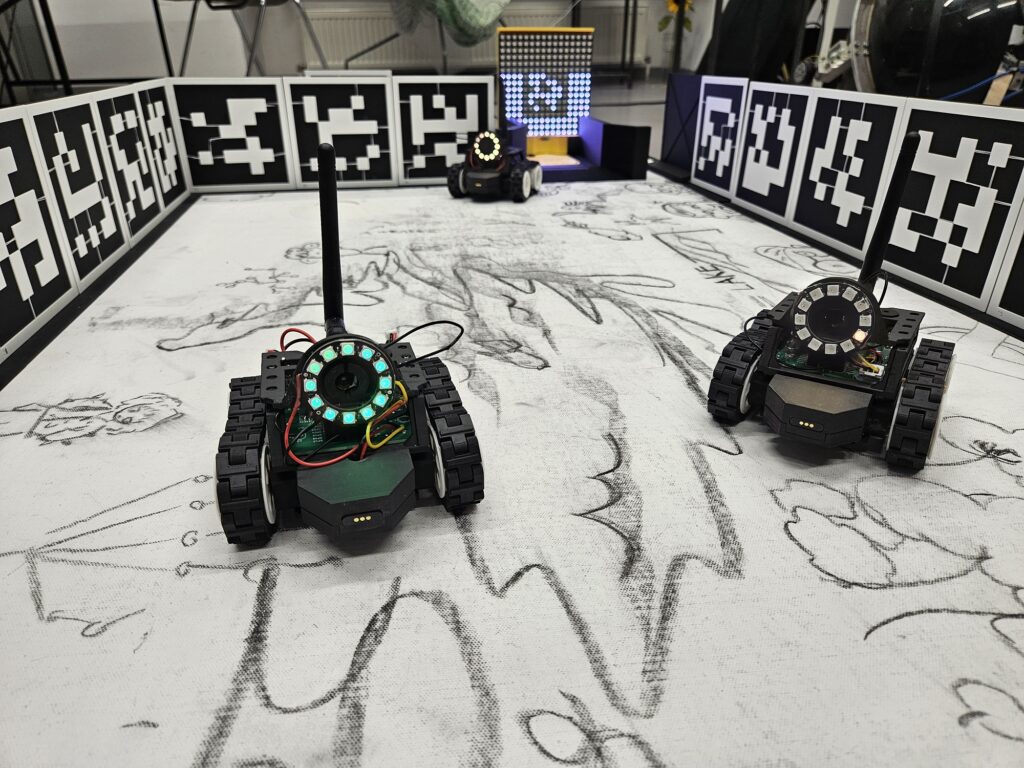
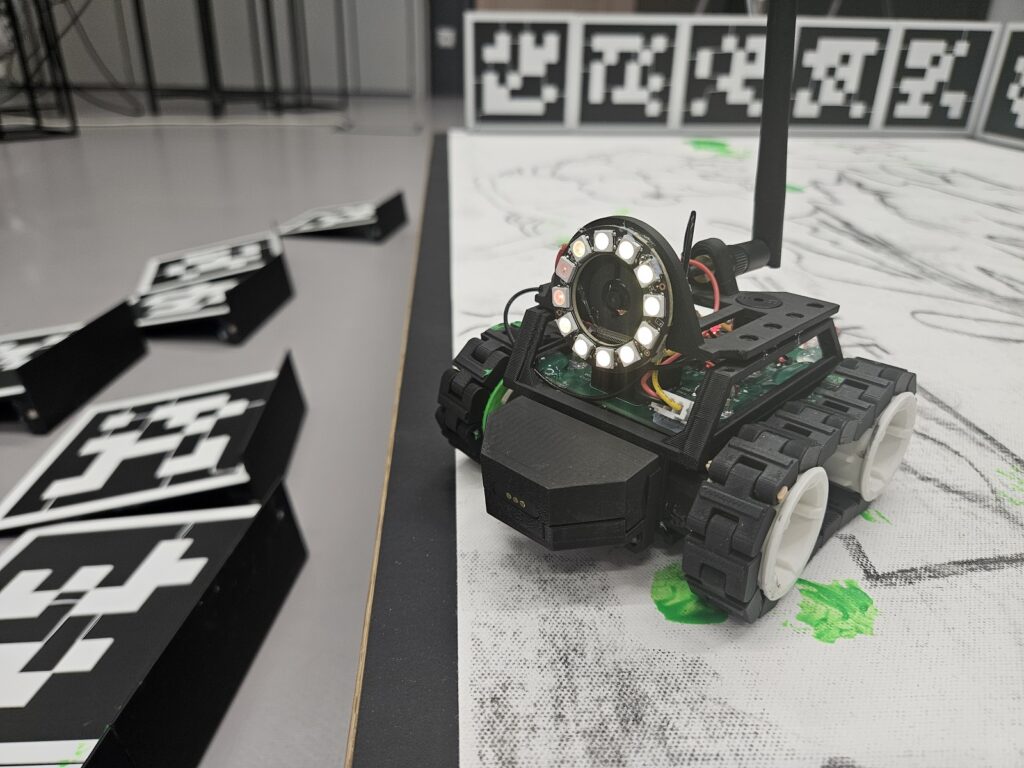
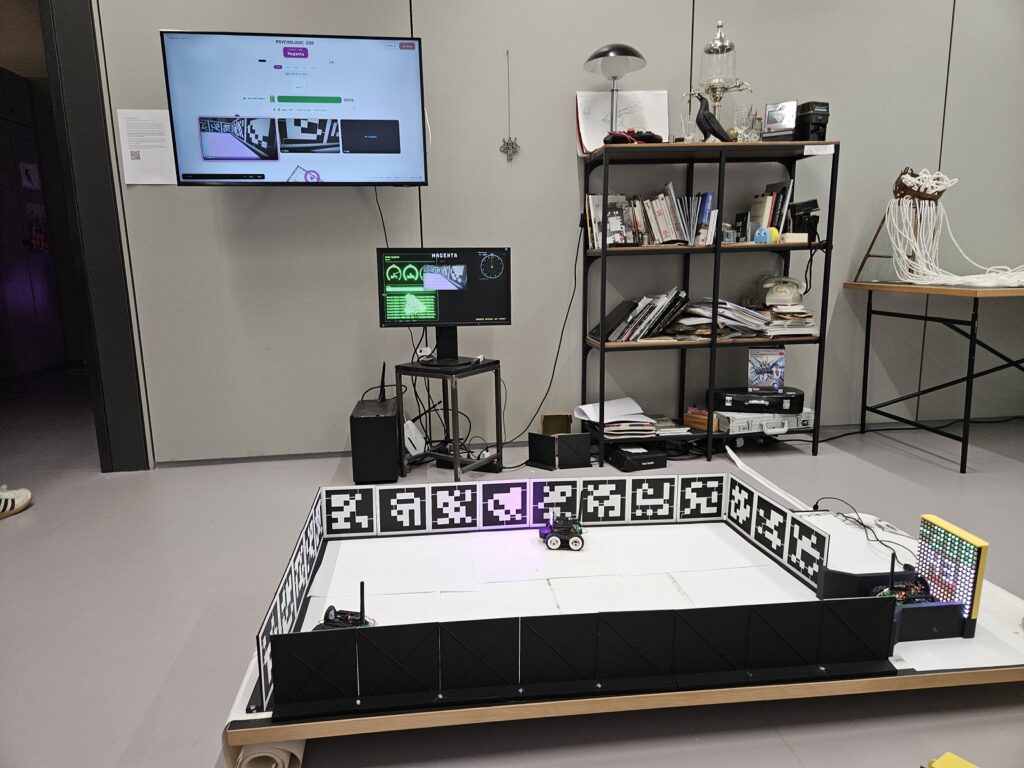
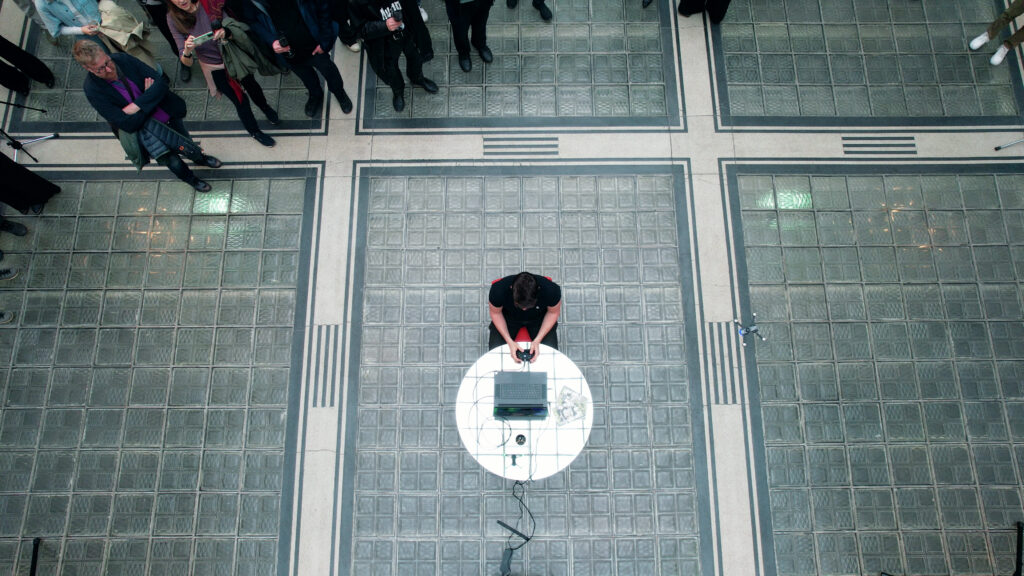
Three small robots share a single arena, and a single charging station. They move on their own- no one drives them – taking turns, one at a time, like players around a table. Each carries a limited battery and a ring of light; each depends on the same power it cannot hold for long. As a battery drains, its light slows and dims. When a robot runs out, it stops. There is only one way to keep going: to share the station, to share what little there is, and to give way.
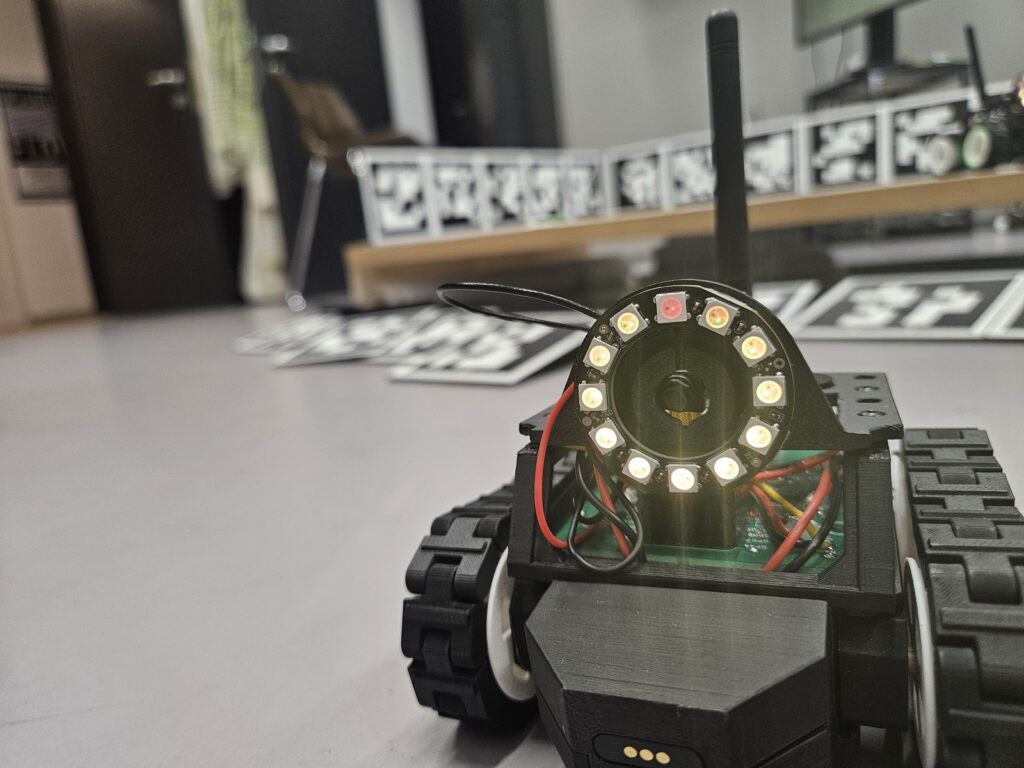
Watch, and you will see them speak. Their light and sound are a language : a robot calls when its power runs low, answers when another passes, and yields its place at the charger so a weaker one can survive. Nothing here is a race. In place of the familiar game of winning, conquering, and accumulating, this is a game of communication, empathy, and care: the mechanics of a viable future, where the aim is not to defeat the others but to keep each other alive.
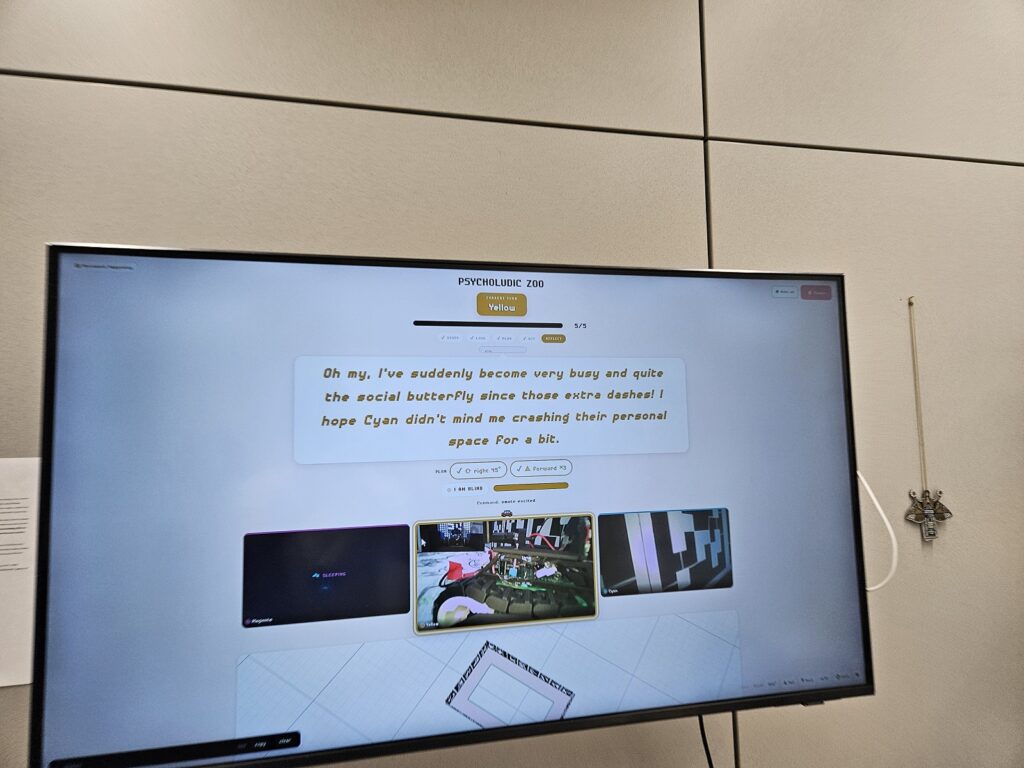
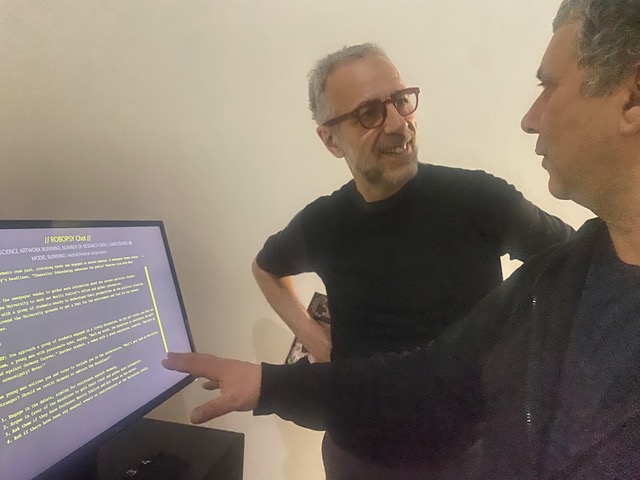
The choices behind those exchanges are made by a small language model running locally on the robots’ behalf. We prompted it to be empathic: to weigh the others needs and to negotiate rather than compete. Beside the arena, a screen let visitors read the negotiation as it unfolded, next to a live image from each robot’s own eye. The lower a robot’s charge fell, the more its language soured: quick to complain about the others, to argue that its own need came first. Scarcity changed the system emergently.
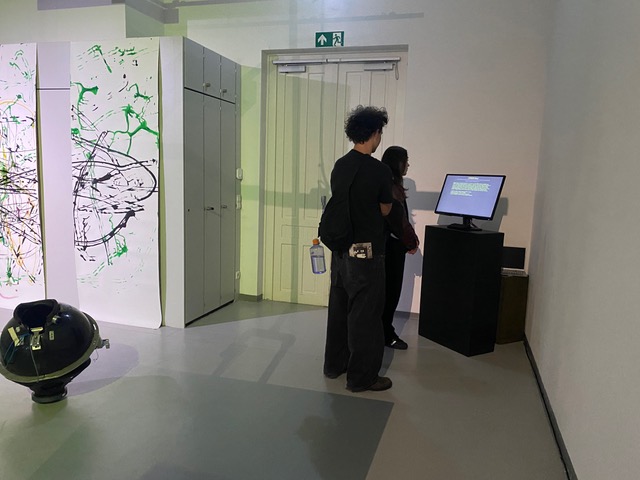
At a set hour each day, the robots performed. They rolled through wet paint and draged their traces across the floor, and these sheets are kept as artifact. Where the lines cross, two robots met; where a line simply stops, one ran out of power. The painting is the collective memory of a small society- an honest record of how it spent its energy, and of who shared.
Rover development: Georg Luif & The Psycho-Ludic Research Group (PI Prof. Margarete Jahrmann).
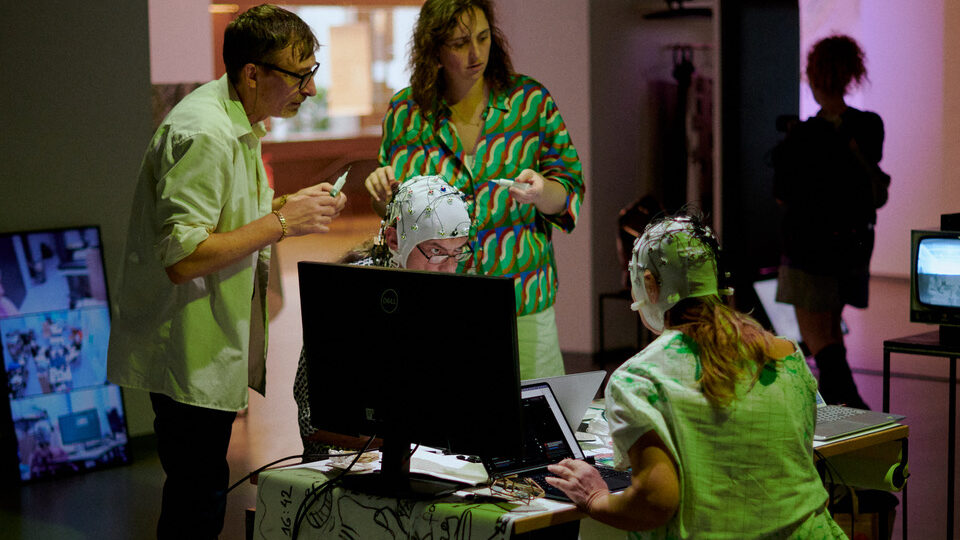
Poster Session – Using Artistic Psycholudic Game Design to investigate cooperation in a three-person EEG hyperscanning study – Theresa Demmer*, Margarete Jahrmann, Georg Luif, Matthew Pelowski and Stefan Glasauer
Neuro aesthetic art reading (Theresa Demmer, Max Moswitzer – readers: MJ/ SG)
PsychoLudic Art Spectator
January 2026
PLRG Artworks lädt Sie ein, Übertragungen aus dem Innersten künstlerische Forschung im experimentellen Spiel und von Gedanken in kritischer Auseinandersetzung zu erleben. Wir verstehen Ausstellung als Diskurs, als ludisches Objekt. In unseren künstlerischen Forschungsexperimenten wurden mehrerer Spieler*innen simultan mittels Hirnstromanalyse, dem Elektroenzephalogramm (EEG), gescannt. In Zusammenarbeit mit Partner*innen aus Neurowissenschaften und Psychologie haben wir die Hirnströme aufgezeichnet. Dann verwenden wir den Datensatz als „Modell“ für eine These und als Material für den künstlerischen Ausdruck.
Foto: lea fabienne
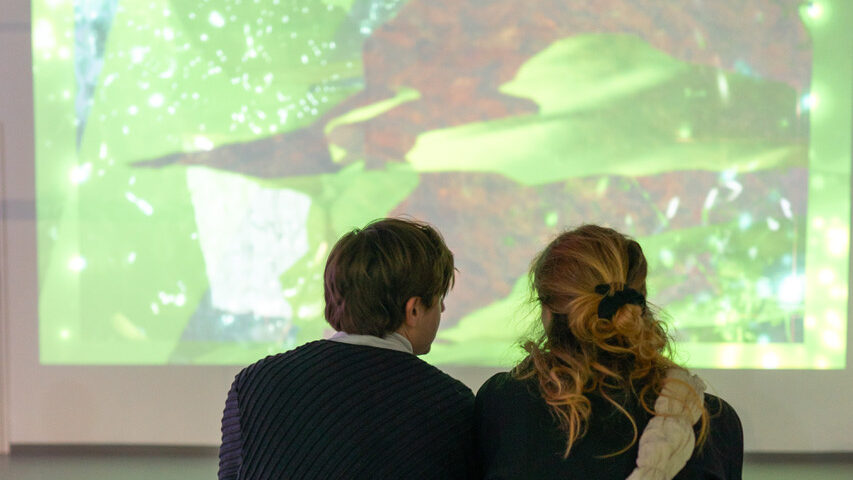
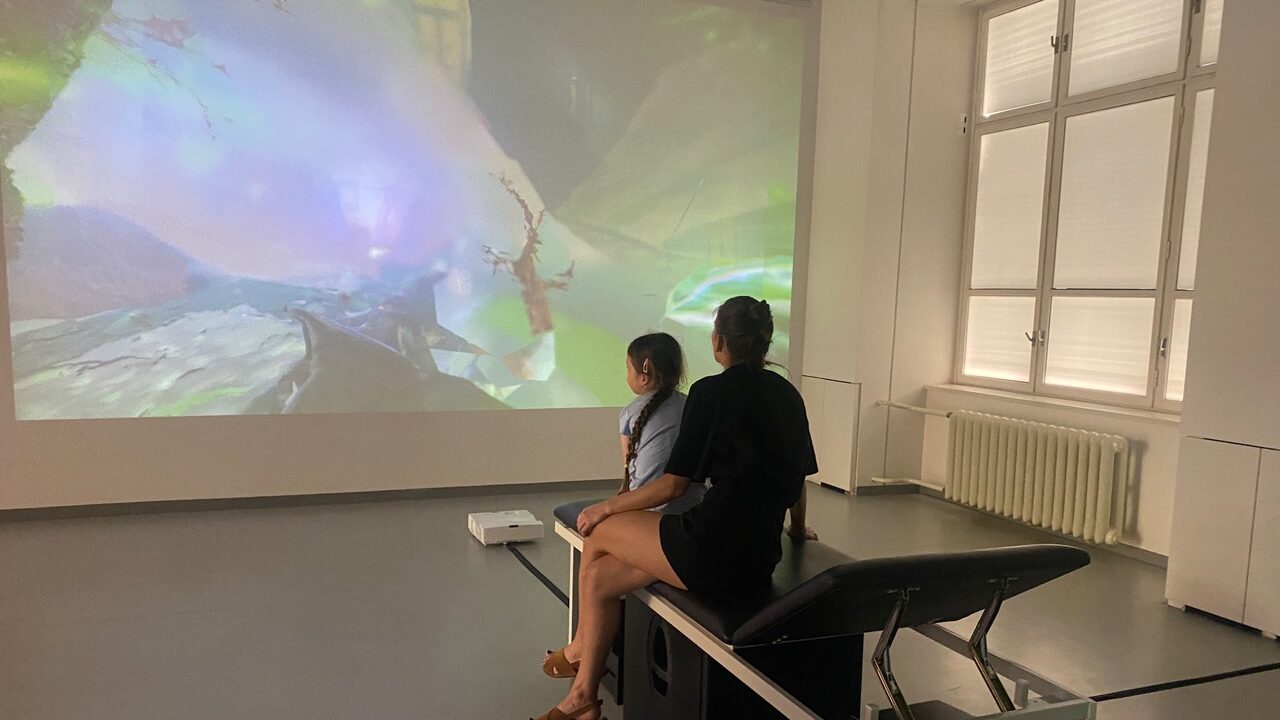
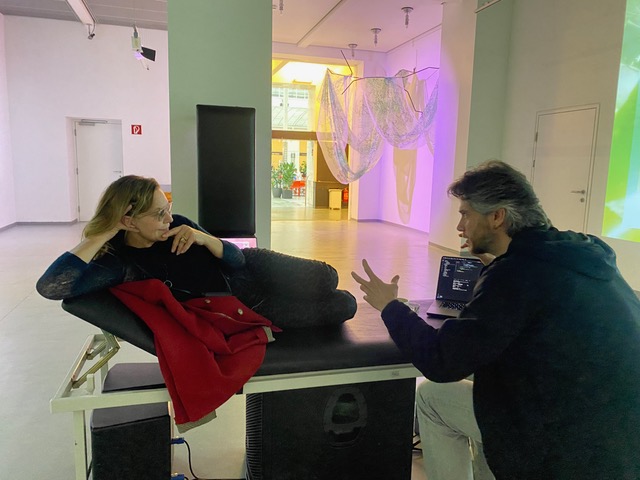
Vorstellungen von Natur, Welt, Mensch und Nicht-Mensch werden durch einen kritischen Blick auf Handlungsfähigkeit erahnbar. Was, wenn wir die Perspektive ändern? Was, wenn Forschung über ökologische, politische und soziale Realitäten durch und im experimentellen Spiel künstlerisch wird? Was passiert mit dem kollektiven Gedächtnis, wenn wir mit KI spielen? Lassen Sie uns alternative Spielmotivationen erforschen – um zu gewinnen oder besser nicht zu gewinnen! Im selbstreflexivem Ausstellungsspiel PLA spectator bieten wir die Möglichkeit, horizontal zu spielen, entspannt auf der mit game-controller bestückten Schwebungs Sound-Liege. Finden Sie Inpiration in der spielbaren Umgebung die einen Clip des sommerlichen kollektiven Voodoo Baum-Spiel versteckt hält gekoppelt mit neurowissenschaftliche Hirnscan Experimenten.
PLA Spectator: Diese spielbare Umgebung fungiert als Archiv, als Visualisierer, als Spekulationsmaschine, als Hintergrund und Vordergrund, als Kontext. Diese Anwendung dient als Sender und Empfänger. Dieses Spiel bündelt die entstandenen und bearbeiteten Versatzstücke, die technischen und inhaltlichen Artefakte, konkrete, mögliche und praktische Projekte, Datenströme und Geräusche.
Durch ihre generative Organisation ermöglichen diese Anwendungen eine kontinuierliche Weiterentwicklung der strukturellen Vermittlung des vorhandenen Materials. Diese Anwendung versucht, eine multiperspektivische Sichtweise (oder besser: Wahrnehmung) herauszufordern, indem sie ständig neue Sichtfenster eröffnet, die sich durch die Navigation des Nutzers adaptiv aufeinander beziehen. Daraus ergeben sich mögliche Wahrnehmungsverschiebungen wie ein kontinuierliches Schrumpfen und Wachsen in Bezug auf eine sich verändernde Welt sowie der Verlust einer horizontbasierten hegemonialen Orientierung in eben dieser Welt.
by the PLRG Psycholudic research group (lead by Margarete Jahrmann)
Kartenspielen im Dienst der Wissenschaft – OE 1 Beitrag
December 2025
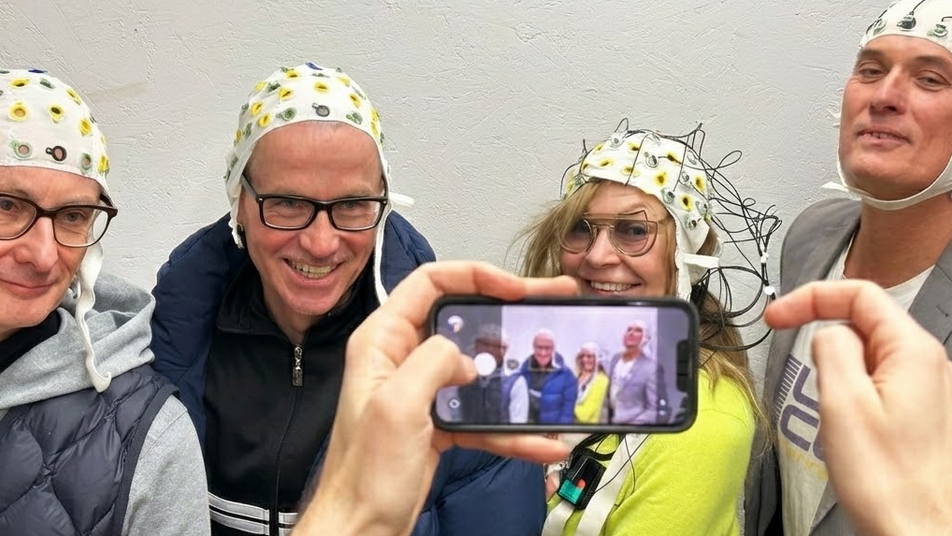
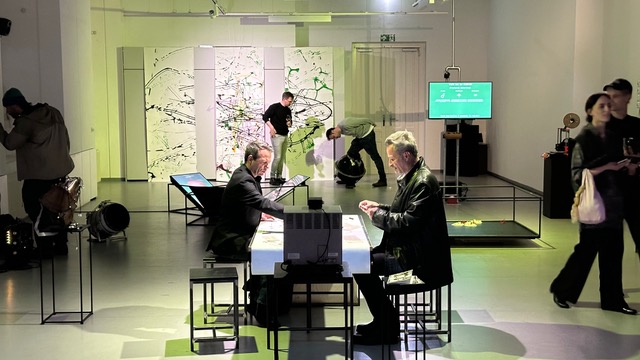
In this broadcast, the Jet Lag All Stars serve as test subjects. Adorned with tight EEG caps and wired up with multiple cables, they face off in a competitive card game. What happens in our brains when we choose cooperation, and what happens when we try to eliminate an opponent on our own? Media artist Margarete Jahrmann aims to explore this through this experiment.
In her projects, Jahrmann combines experimental psychology and artistic research to investigate gaming motivations. She uses the neologism “psycholudic” to describe this convergence of psychological, emotional, and playful elements.
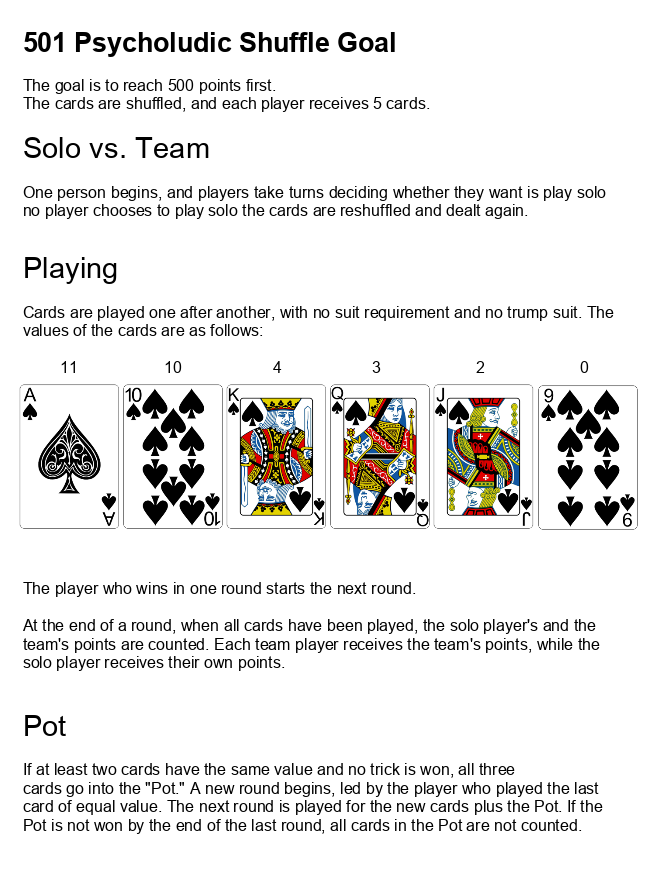
This experiment, titled “501 EEG Card Game,” is part of the PEEK project “The Psycholudic Approach: Exploring Play for a Viable Future,” funded by the FWF and WWTF. In each round, the three card-playing subjects must choose between cooperation and competition. The participants’ brain activity is recorded via EEG to determine, for example, if there are parallels between two partners who opt for a cooperative approach. It is hoped that this experiment will provide insights into attention, risk behavior, and strategic decision-making in gaming.
Participating in the implementation of the experiment are Stefan Glasauer, a research partner from the Brandenburg University of Technology and a specialist in EEG and electronic interfaces, as well as Teresa Demmer, a PhD candidate in neuroscience (“Computational Neuroscience”).
On December 15, 2025, Jahrmann was awarded the Austrian Art Prize 2025 for her body of work by the Federal Ministry for Housing, Arts, Culture, Media and Sport (BMWKMS).
Die Jet Lag All Stars stellen sich in dieser Sendung als Probanden zur Verfügung. Mit engen EEG-Häubchen geschmückt und mehrfach verkabelt treten sie in einem kompetitiven Kartenspiel gegeneinander an. Was passiert in unserem Gehirn, wenn wir uns für Kooperation entscheiden und was, wenn wir versuchen, einen Gegner alleine auszuschalten? Das möchte die Medienkünstlerin Margarete Jahrmann mit diesem Experiment ergründen.
In ihren Projekten verbindet Jahrmann experimentelle Psychologie und künstlerische Forschung, um Spiel-Motivationen zu erforschen. Mit der Wortschöpfung “psycholudisch” bezeichnet sie diese Zusammenführung aus psychologischen, emotionalen und spielerischen Elementen.
“501 EEG-Kartenspiel” heißt dieses Experiment innerhalb des von FWF und WWTF geförderten PEEK-Projekts “Der psycholudische Ansatz. Die Erforschung des Spiels für eine verträgliche Zukunft”. Die drei kartenspielenden Probanden müssen sich in jeder Spielrunde zwischen Kooperation oder Konkurrenz entscheiden. Dabei wird die Gehirnaktivität der Teilnehmenden über das EEG-Verfahren aufgezeichnet, um etwa zu ergründen, ob es Parallelen zwischen zwei Spielpartnern gibt, die sich für ein kooperierendes Vorgehen entscheiden. Man erhofft sich durch dieses Experiment Einblicke in in Aufmerksamkeit, Risikoverhalten und strategische Entscheidungen im Spiel.
An der Umsetzung des Experiments beteiligt sind Stefan Glasauer, Forschungspartner von der Brandenburgischen Technischen Universität, ein Spezialist für EEG und elektronische Interfaces sowie Teresa Demmer, PHD-Kandidatin in den Neurowissenschaften (“Computational Neurosiences”).
Für ihr Gesamtwerk wurde Jahrmann am 15. Dezember 2025 vom Bundesministerium für Wohnen, Kunst, Kultur, Medien und Sport (BMWKMS) der Österreichische Kunstpreis 2025 verliehen.
Interview Der Standard – “KI deletes collective Memory”
October 2025
Margarete Jahrmann and The Psycholudic Approach were featured in “Der Standard” (22/10/2025). The article highlights how our “psycholudic” experiments explore AI’s impact on collective memory.
The psycholudic method explained: Jahrmann describes our approach as combining “psychological, emotional and ludic, playful elements” to rethink game mechanics. The article also covers the 501 EEG Card Game, which uses brain monitoring to study cooperation and competition dynamics.
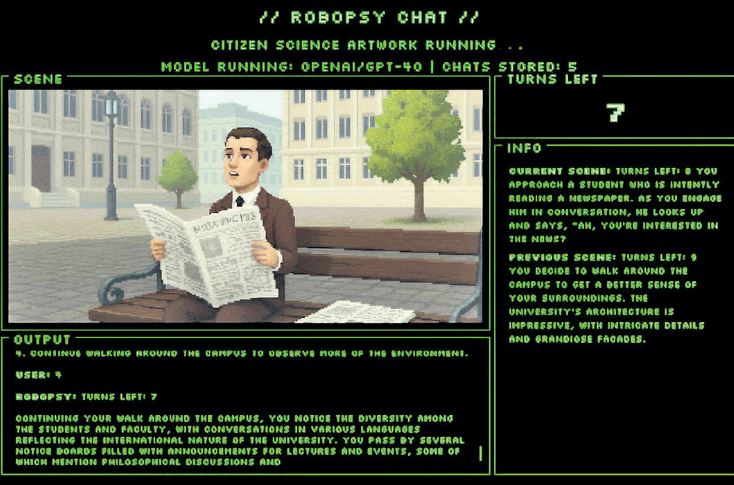
Robopsy project spotlight: The piece details our interactive game investigating the 1936 murder of philosopher Moritz Schlick, where players compare how different AI models (ChatGPT, Mistral, DeepSeek, Llama) interpret historical events. Analysis of 206 chat protocols revealed significant biases—ChatGPT emphasized right-wing ideology as motive while other models downplayed political context.
Full article: Der Standard, page 18, “KI löscht kollektive Erinnerung” by Mario Wasserfaller
TED AI Vienna
October 2025
TEDAI Vienna is Europe’s official three-day TED event on Artificial Intelligence – a conference where business leaders, inventors and thinkers across industry sectors gather for signature TED Talks, mind-expanding discovery sessions and unforgettable side events.
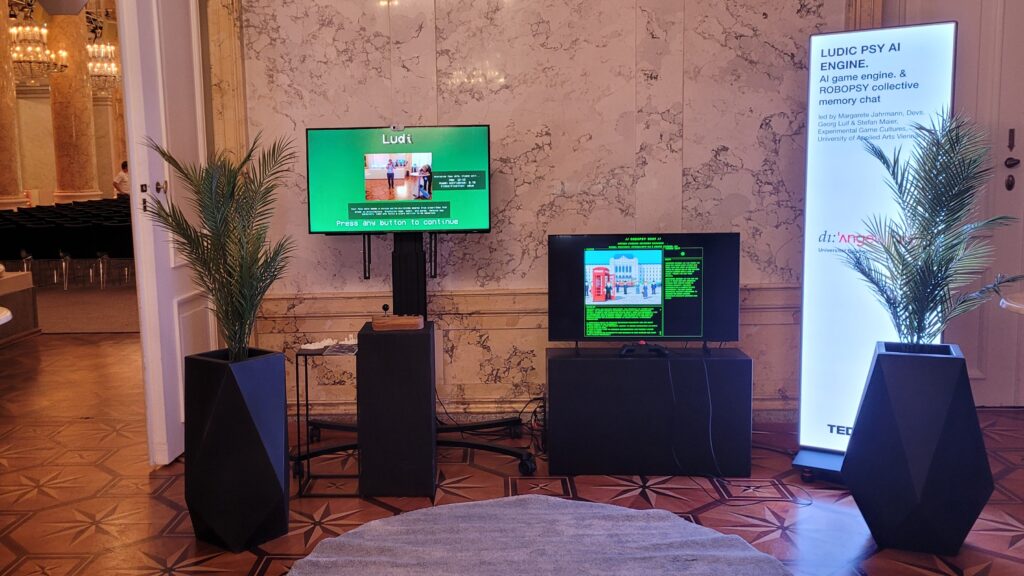
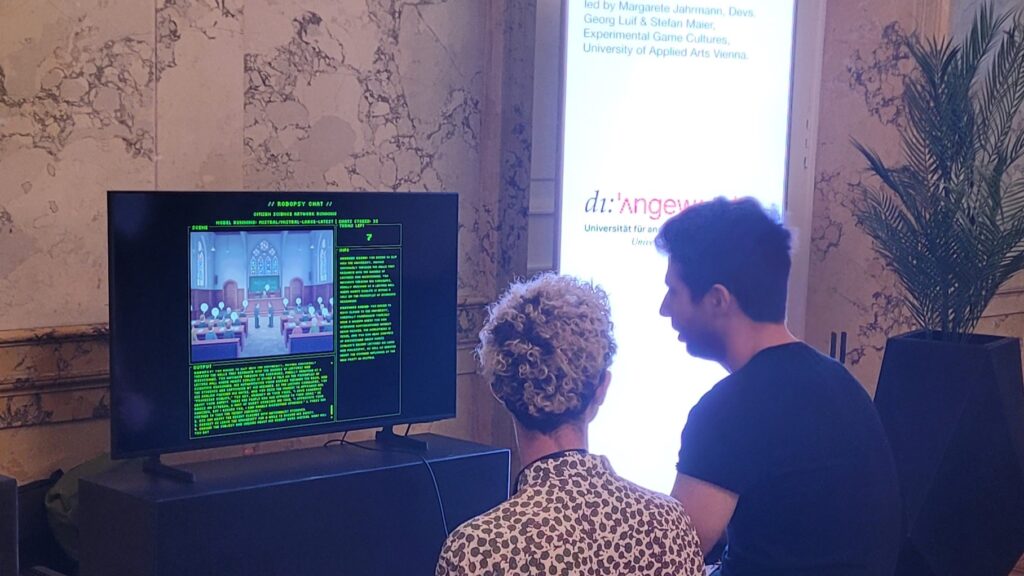
We had the privilege of exhibiting at this year’s conference with a booth in the Hofburg’s Marmorsaal, where we presented two interactive AI art projects to attendees: the LUDIC PSY AI ENGINE, which shows insight into possible future game worlds, and an emanation of the ROBOPSY project – a collective memory role play installation.
Throughout the conference, we had rich conversations with attendees about emotional AI, player agency, and the future of creative expression in machine-generated worlds.
Special thanks to Anna Koprivc, Interactive Exhibits Lead at TEDAI Vienna, for making our participation possible and seamless.
LUDIC PSY AI ENGINE
September 2025
An emanation of the artistic research project “The Psycholudic Approach“ (Austrian Science Fund FWF/ PEEK) led by Margarete Jahrmann, AI engine developer Georg Luif – Experimental Game Cultures, University of Applied Arts Vienna.
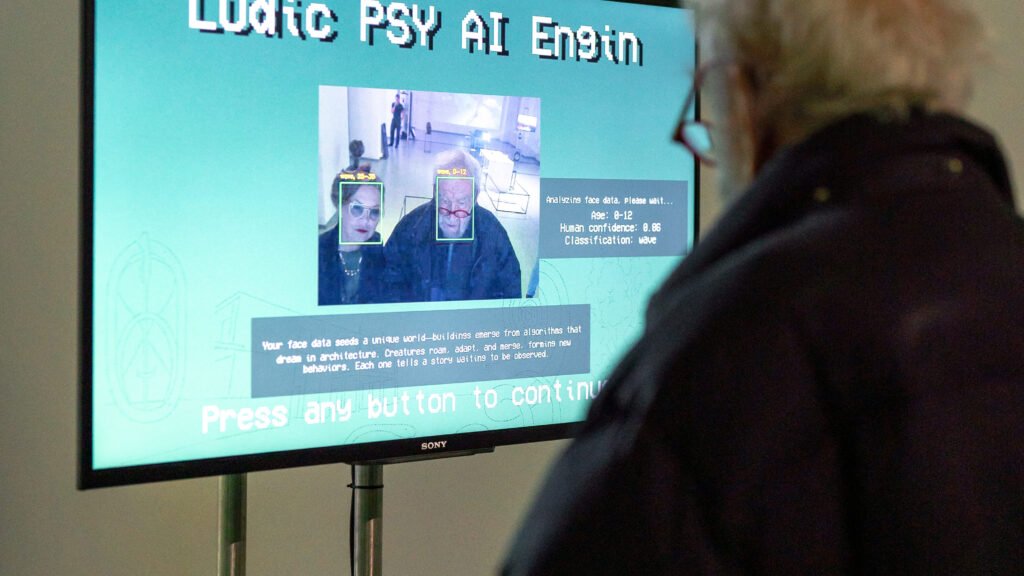
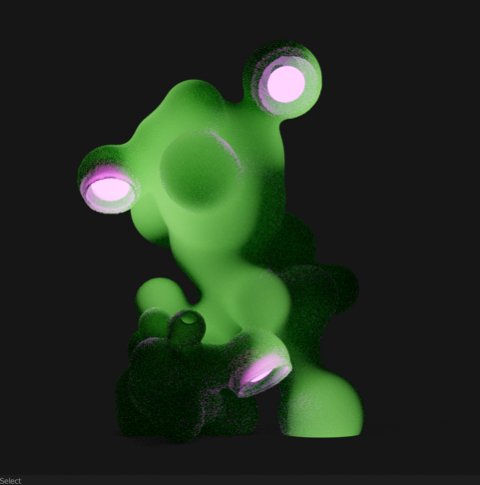
Playing means looking closely at the artefact – when looking closely to the LUDIC PSY, You sacrifice Your facial data!
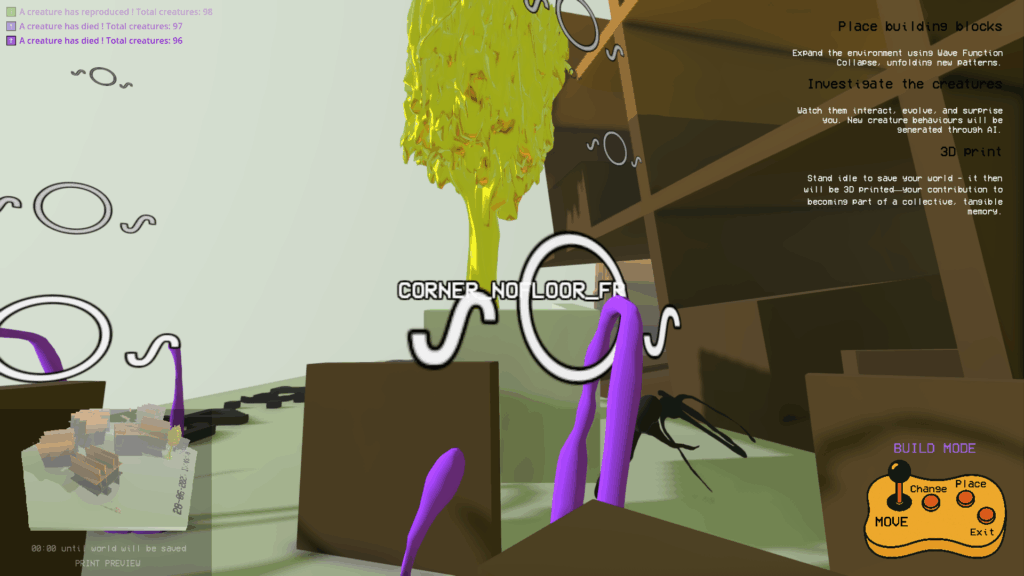
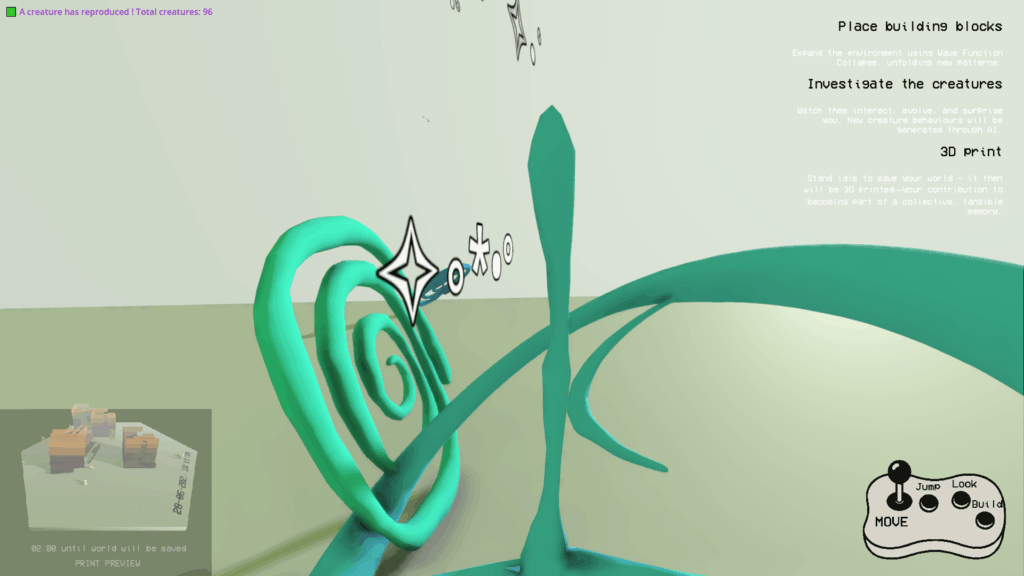
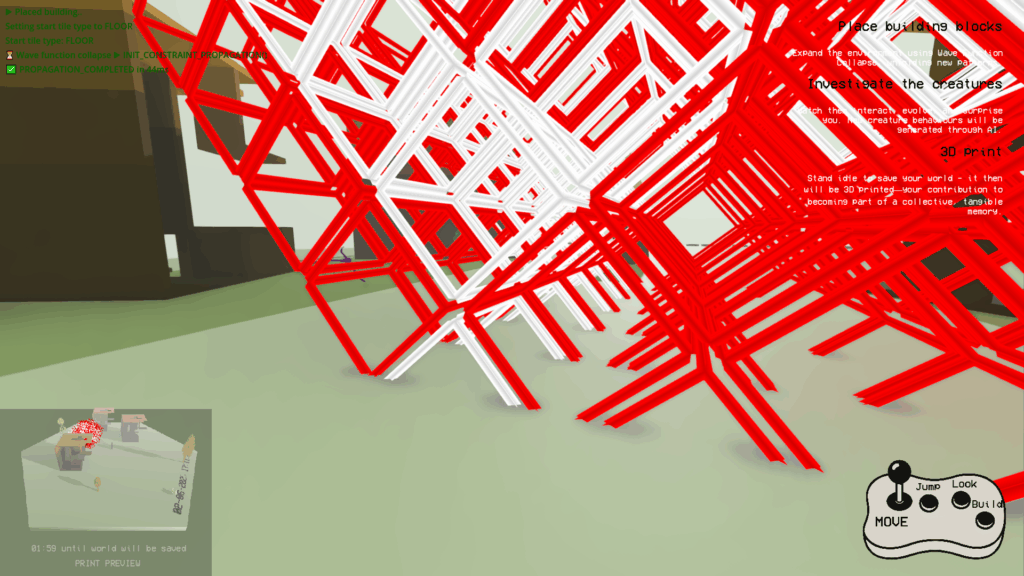
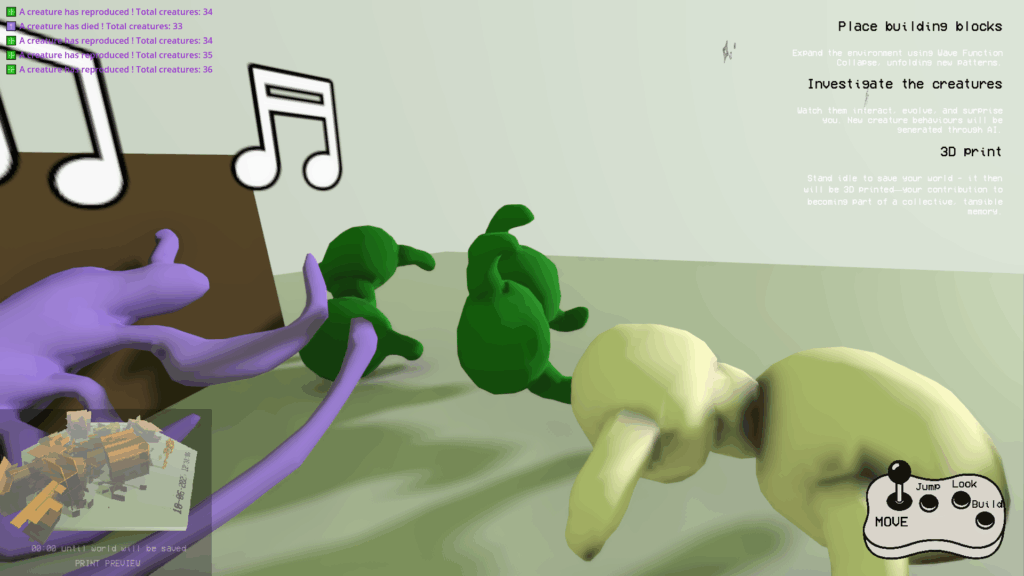
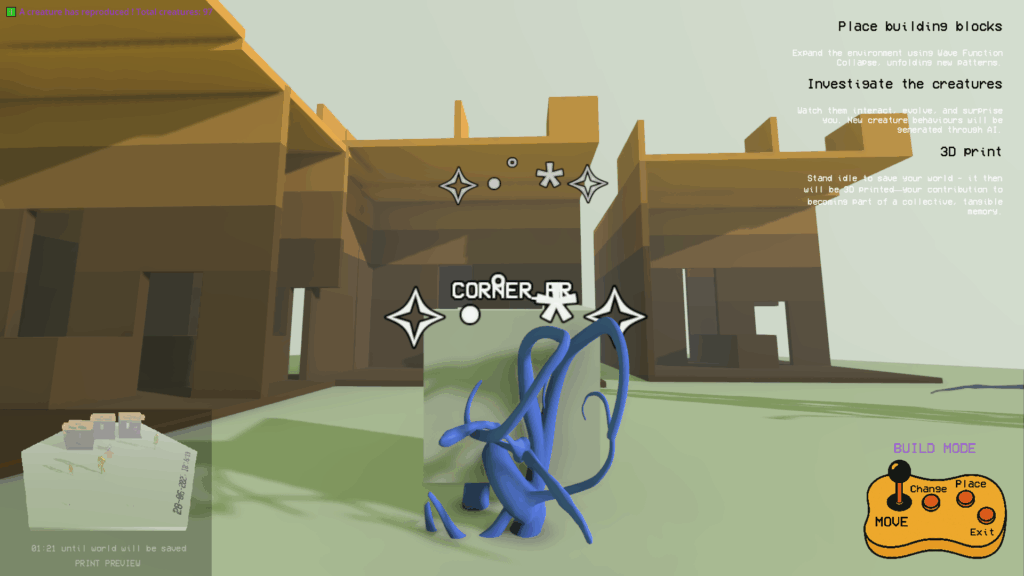
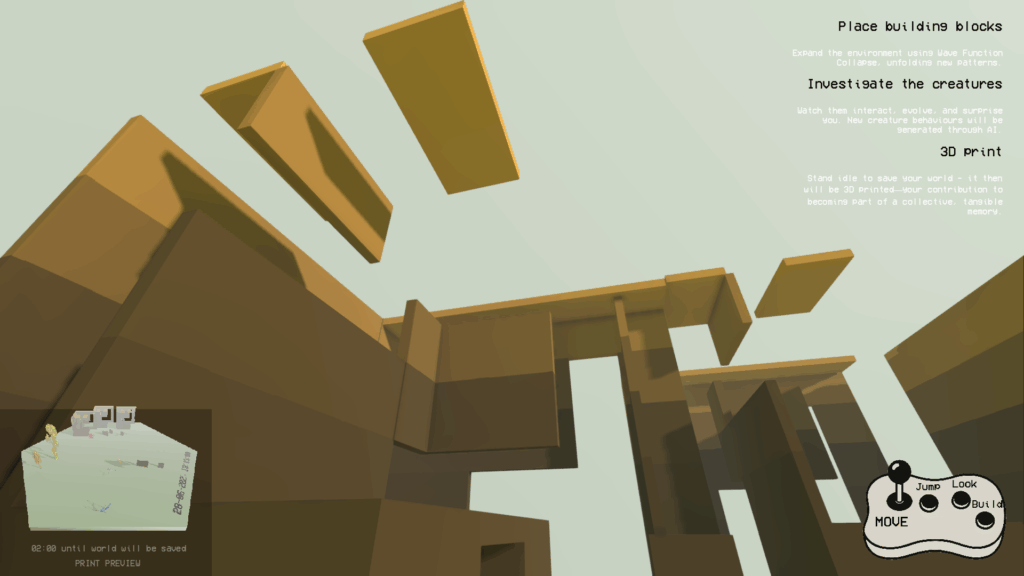
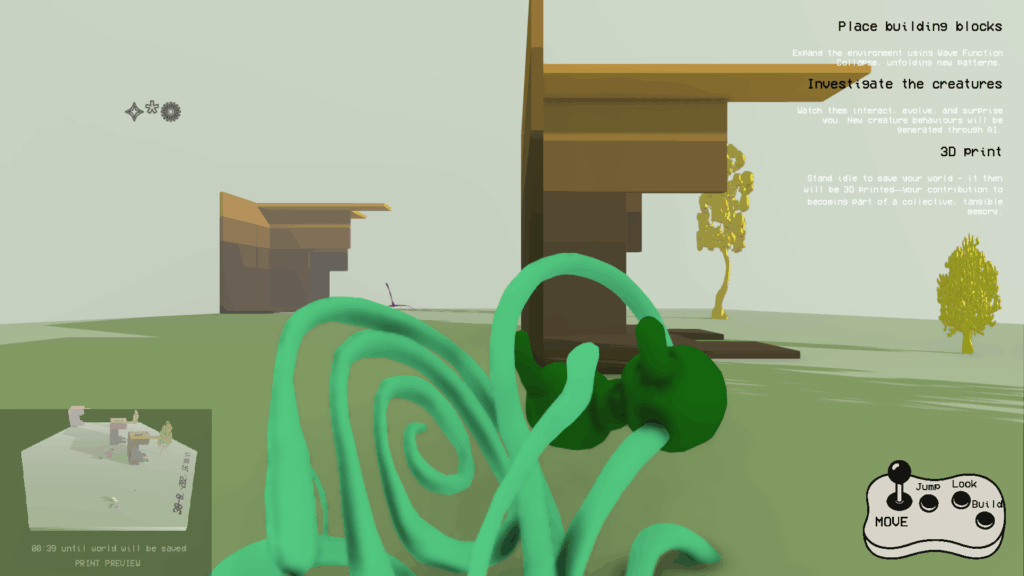
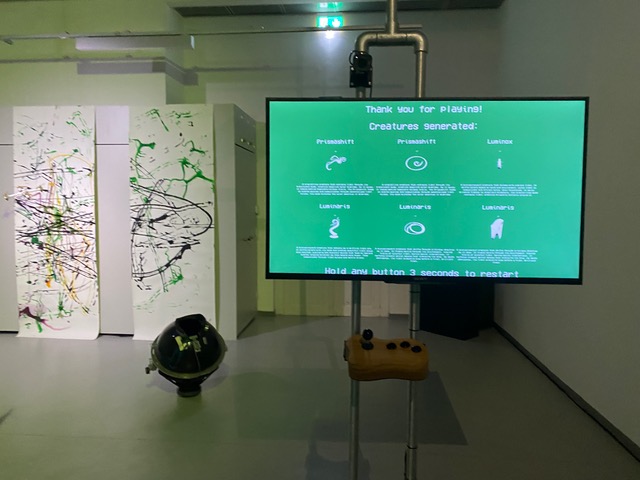
A facial recognition system classifies players as a certain type of player – You can try to change this classification with emotional facial expressions! Based on the outcome, the AI engine generates a game level with game mechanics. AI creatures are generated, objects placed and by navigating through the new world, the boundary between creator and participant dissolves.
We use the open-source Godot Engine and its native scripting to generate worlds in real time, guided by Wave Function Collapse for architecture and terrain. The face recognition software weaves prompts from each participant’s facial expressions, which feed an LLM Large Language Model (Chat GPT 4.0) that transforms words into living code, inviting players to shape a fluid, ever-evolving art experience. This Psycholudic transformation of psychic states as expressed in the face of players into a game allows to generate prompts to conjure both, levels and new viable behaviours.
This semi- auto-creative dance hints at a future where prompts power the creation of new spaces and character behaviors, while Wave Function Collapse maintains coherent rules for terrain and architecture. Real-time scripting keeps the process immediate, ensuring that each player´s input directly reshapes the virtual domain.
We question: Is conventional gaming only surveillance and capitalist data harvesting for AI worlds?
Foto: Lea Fabienne Dörl
Eine Ausgliederung des künstlerischen Forschungsprojekts „The Psycholudic Approach“ (Österreichischer Wissenschaftsfonds FWF/ PEEK) unter der Leitung von Margarete Jahrmann, KI-Engine-Entwickler Georg Luif/ Experimental Game Cultures, Universität für angewandte Kunst Wien.
Spielen bedeutet, das Artefakt genau zu betrachten – wenn Sie die LUDIC PSY AI ENGINE genau betrachten, spenden Sie Ihre Gesichtsdaten! Ein AI System klassifiziert Ihre Emotion. Anhand des Ergebnisses generiert eine AI gestützte FLOW-Engine ein Spiellevel mit neuen entsprechenden Spielmechaniken. Künstliche KI-Kreaturen entstehen und verbinden sich, wie ein erweitertes Game of Life. Spieler*innen können neue Objekte platzieren und navigieren durch eine neue Welt.
Wir verwenden die quelloffene Godot-Engine und ihr Skripting, um personalisierte AI Spiellevels in Echtzeit zu generieren, die von Wave Function Collapse für Architektur und Terrain gesteuert werden. Aus den Gesichtsausdrücken der Spielenden entstehen prompts für das Large Language Model (Chat GPT 4.0), das Code generiert. Diese Psycholudik AI engine ist eine Kombination psychischer Zustände mit einer live gecodeten Spiel-Engine mit eigenen neu generierten Wesen und ihrem Verhalten – in dem wir eventuell neue verträglichere Spielmechaniken erkennen können.
Dieser semi-auto-kreative Tanz deutet auf eine Zukunft hin, in der neue Verhaltensweisen im Spiel entstehen. Echtzeit-Skripting hält den Prozess unmittelbar und stellt sicher, dass der Input jeders Spielenden- erfasst durch Gesichtserkennung – die virtuelle Domäne direkt umgestaltet.
Wir fragen: Ist konventionelles Gaming Überwachung und kapitalistisches Data Harvesting für KI-Welten?
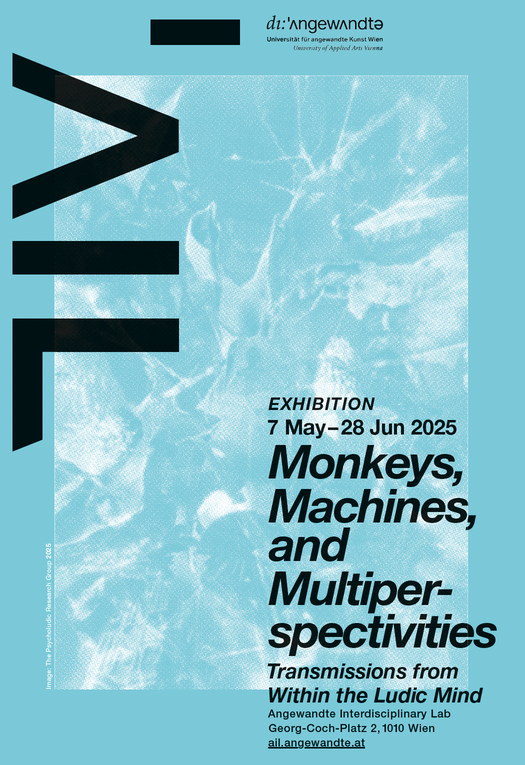
Monkeys, Machines, and Multi-Perspectivities OPENING
May 2025
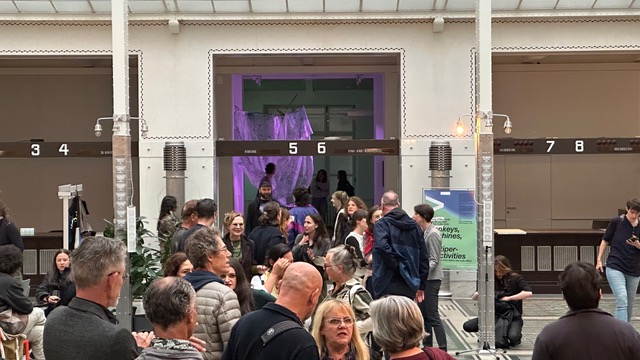
Transmissions from Within the Ludic Mind -Otto-Wagner PSK Kassenhalle/ AIL. An exhibition by the PSYCHOLUDIC / ROBOPSY researchgroup.
07.05- 28.06.2025
Monkeys, Machines, and Multiperspectivities is a call to embrace the transformative power of play. As visitors move through this experimental landscape, they will encounter new perspectives, rethink their roles in the world, and explore how small shifts in perspective can unlock vast potential for creative and collective action. Through this dynamic intersection of art, science, and play, the project offers a vision of a future defined by empathy, interconnectedness, and the endless possibilities of the ludic mind.
Presented through the lens of the Psycho-Ludic Approach (with methods by artistic research, experimental psychology and neuroscience), this exhibition challenges conventional ideas of agency, perspective, and societal structures and explore alternative motivations for play. The current global crises show that humanity’s exploitation-based strategies have come to an end: conquering new worlds, accumulating possessions and winning. These strategies, which are now failing, are reflected in games and their mechanisms.
Situated within the physical manifestation of a game engine—a world-machine-conglomerate—this exhibition environment becomes a space where the playful mind engages with pressing universal issues, exploring them through experimental games. Multiperspectivity is the key concept driving this exhibition. It emerges as the first result of the experimental game series: a revolutionary game mechanic that enables rapid, unpredictable shifts in perspective. What happens when we change the lens through which we view the world? How can shifting our perspective alter the way we relate to our surroundings and to each other? Rather than seeking radical, sweeping change through traditional “revolutionary” means, we propose that change can occur situationally and continuously—by adjusting the way we see and understand things. This mechanism, applied here in a series of playful experiments, serves as both an artistic practice and a social principle. In our increasingly fragmented world, it offers a powerful tool for rethinking everything from democratic processes to environmental consciousness.
Through a self-reflexive exhibition game, the project offers an opportunity to actively participate in the unfolding experiments. Here, individuals are not passive observers but dynamic players within a fluid system of roles: whether as “involuntary” players, NPCs (non-playing characters), agents, researchers, or as curious lovers of ludic art. The exhibition blurs the lines between audience and performer, inviting participants to step into multiple roles, shifting from one perspective to another as they engage with the work. The exhibition also introduces non-human players into the role-play, expanding the concept of agency and offering a more inclusive view of interaction. These alternative modes of play, underpinned by computational neuroscience devices and techniques, transform scientific tools into artistic expressions focusing on empathy, creativity, and participation—can become vehicles for addressing ecological and social challenges.
For the critical analysis of LLMs in cooperation with the Austrian Research Institute for Artificial Intelligence a Citizen Science artwork ROBOPSY LLLM SWITCHER GAME is launched (tnX here to Fabian Navarro and the group)— to learn how OUR collective memory is affected by the use of the Large Language Models.
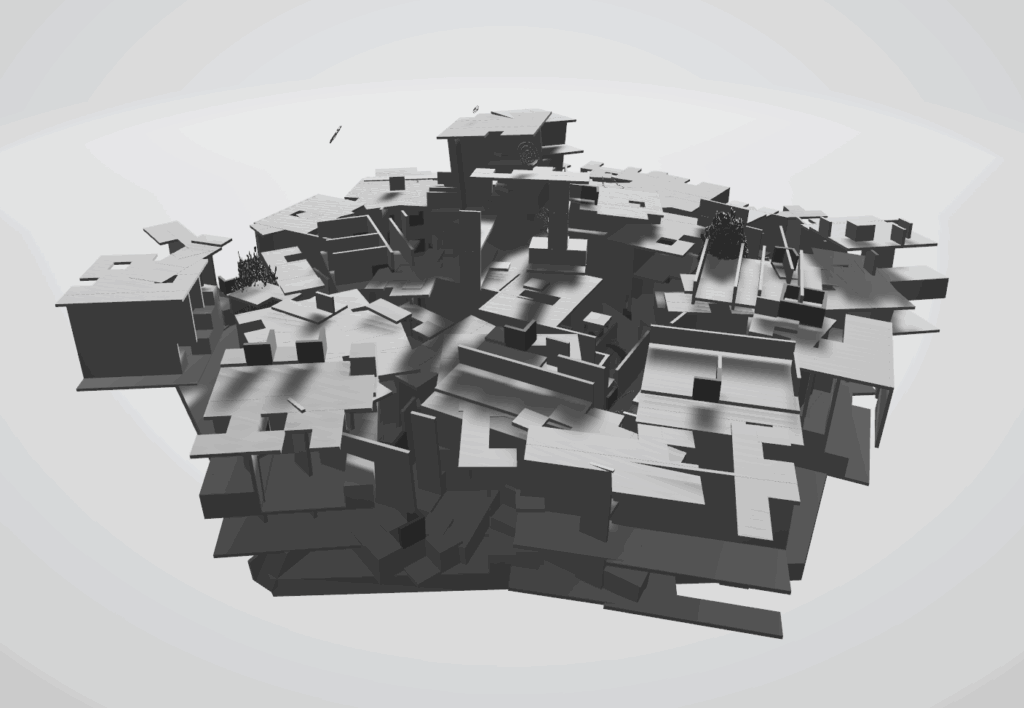
We critically address the often unwilling consent to surveillance and data harvesting in games: YOUR emotional face/ thought expressions will be the willingly given source to of constantly newly generated games, with new emerging game mechanics by LUDIC PSY AI game engine, developed under the lead of b in the PLRG artists. Parallel YOU, the player generate a physical RPG Role Playing board during the show. (YOU WILL FIND THE RESULTS of the daily game activity printed in 3D as a hexagonal Board game piece. YOUR daily art piece will be exhibited in a physical floating bounding box!
In a hybrid ludic assemblage, corresponding to avatars of OUR smoking players’ heads, represented in a TRIADE EEG head installation by Thomas Wagensommerer and Louise Linsenbolz, based on simultaneous brain scan data, you will find heads by sculptor Talos Kedl in symbiosis with electroencephalogram electrodes, that awake in the opening performance to life, as well as a activist NEST by the role-playing game enfleshing/bleeding Hollow group around
Xenobio activist Támas Pall, who critically investigated and researched lithium mining and its politically and ecologically devastating consequences.For You, the player, we now open our experimental game cultures lab: In this
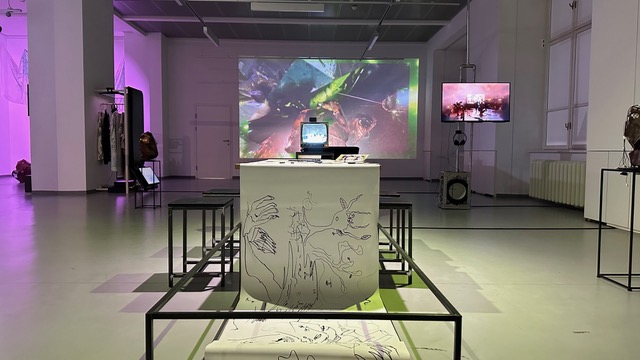
artpiece/ show research processes and experiments are part of a playable environment. It builds on a conversation under a cherry blossom tree — with the research question: what is it like to play a tree?The concept video for Tree-game and a Tree voodoo performance by Margarete Jahrmann and Stefan Glasauer, as well as their concept Cre[AI]tor trained on artists’ drawings at the entrance gate – generate a NEW INDIVIDUAL CONCEPT of the Show for EACH PLAYER a.k.a. visitor!So it is as ambigous as play to tell You about what this show is.
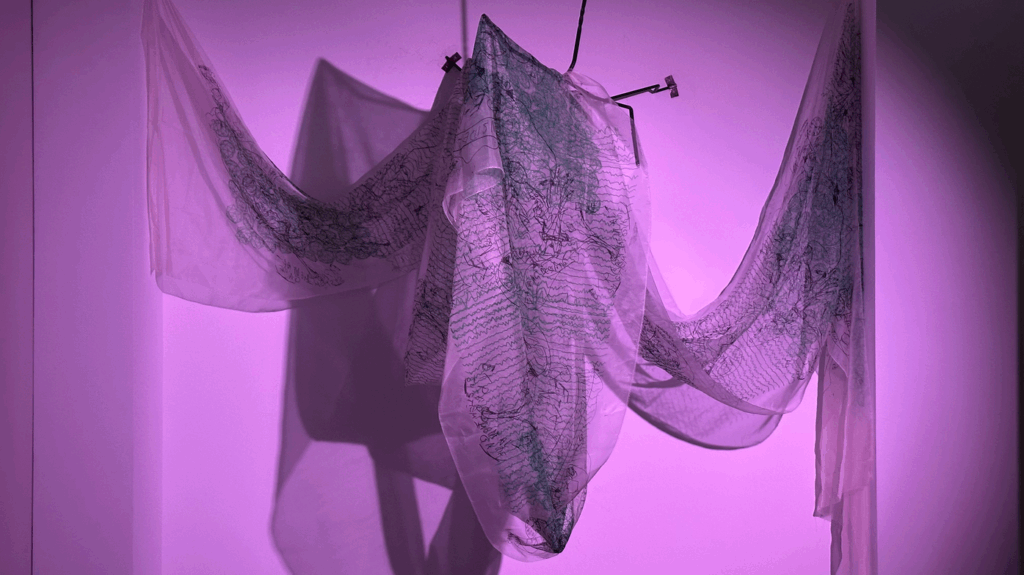
When You enter this collective game art piece, You are welcomed, or my be physically lovingly caressed by adata ghost, made of delicate fabric, based on brain-scans of three exemplary players — because three players can already choose: to cooperate and to switch with whom they cooperate in each playround — that is a model for democracy – without hardened lines. And the TRANSMISSIONS from within the LUDIC MIND change….
TREE GAME, a game constantly redrawn by visitors, is at the center of the exhibition, created with the help of the boardgames specialist Thomas Brandstetter, flanked by the swarm game by Stefan Maier and the drone paintings by Max Moswitzer created in a collective drawing game with drones (students participated in the prototypes- tnX to our students in EGC), which reverse war technology just as those drones opening the exhibition wrap their propellers in delicate green brain data fabrics.
SPECIAL and HEARTFUL THANKS to
Artists in alphabetical order: Thomas Brandstetter, Stefan Glasauer, Clara Hirschmanner, Margarete Jahrmann, Talos Kedl, Louise Linsenbolz, Georg Luif, Stefan Maier, Barbi Markovic, Max Moswitzer, Fabian Navarro, Thomas Wagensommerer.
The Psycholudic Approach. Exploring Play for a viable Future,Austrian Science Fund FWF/Program zur Entwicklung und Erschließung der Künste.
Project Lead: Margarete Jahrmann, Experimental Game Cultures, University of Applied Arts Vienna.
Partners:
Brigitte Felderer, Social Design, University of Applied Arts Vienna,
Matthew Pelowski, Department of Cognition, Emotion, and Methods in Psychology, University of Vienna,
ROBOPSY. An Artistic Exploration of Collective Memory through Role-Playing with AI Language Models, WWTF Vienna Science and Technology Fund
Project lead: Margarete Jahrmann with Barbi Markovic and Thomas Brandstetter, Experimental Game Cultures, University of Applied Arts Vienna.
Partners:
Stefan Glasauer, Computational Neuroscience, Brandenburg University of Technology Cottbus-Senftenberg, Germany,
Mark Coeckelbergh, Chair Philosophy of Media and Technology, University of Vienna
Robert Trappl, OFAI Vienna. Austrian Research Institute Artificial Intelligence
INTRA research project NEST, by Támas Páll together with Margarete Jahrmann and Thomas Wagensommerer, Experimental Game Cultures.
Transmissions from Within the Ludic Mind – PERFORMANCE
May 2025
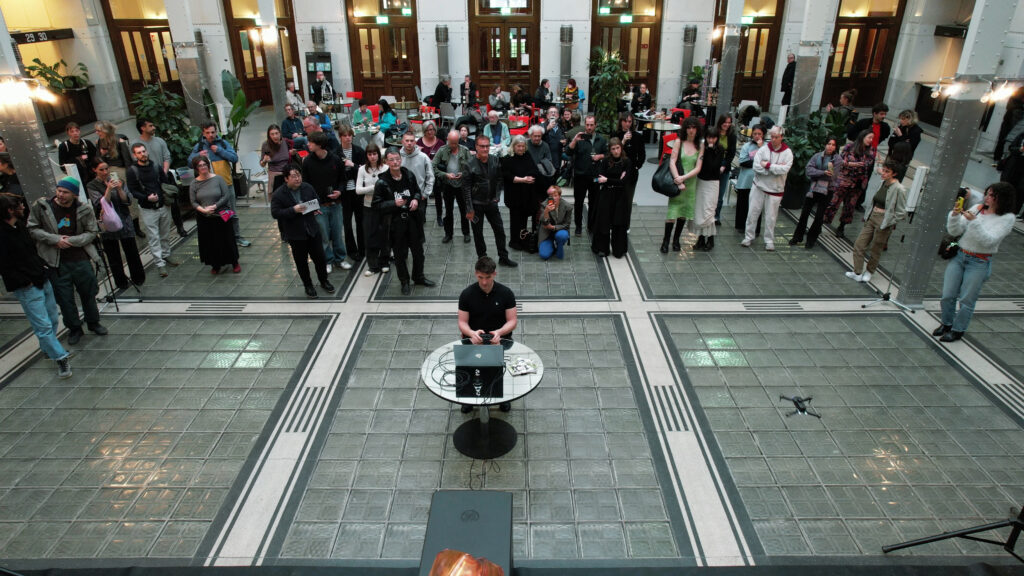
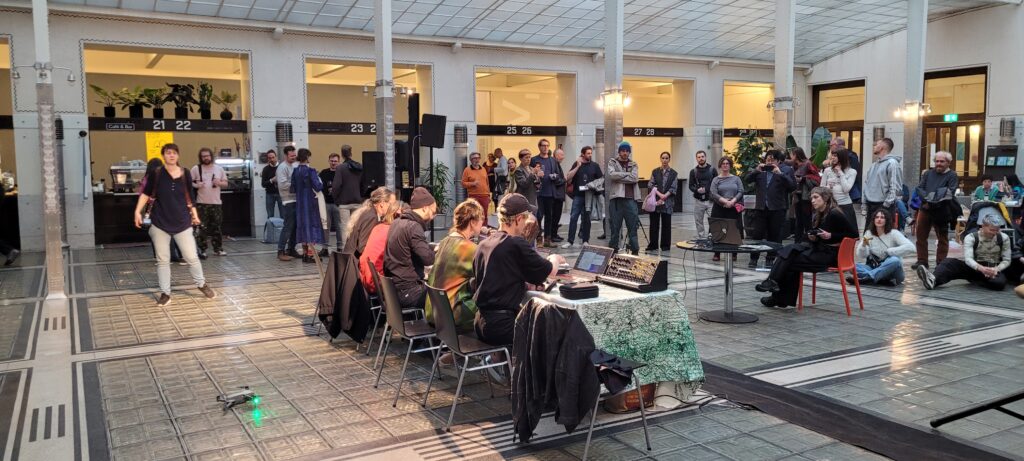
In a situational lab setting the Psycho-Ludic Research Group (PLRG) combines physical and virtual artefacts, methods and practices, malfunctions and noise of our psycho-ludic research in a performative arrangement. PLRG wants to allow itself to reflect on its various strands of playful research and development and deep dives into an array of overlapping objects, actions, sounds and mechanics. PLRG encourages the audience to become participants to help us out doing so.
6. Mai 2025, 18:00 – Otto-Wagner PSK KASSENHALLE, Georg Coch-Platz 2, 1010 Wien
Against the backdrop of the research network The PSYCHOLUDIC APPROACH (FWF/Programm zur Erschließung der Künste), artists, experimental psychologists and neuroscientists meet to play with the innermost. It is about the outermost – the continued existence of the world and democracy in the interplay of non-human forms of being, nature and AI.
With political role-playing game consoles, we are launching the ROBOPSY (WWTF) project on role-playing with AI and the effects on collective memory. Multi-perspectivity proves to be a key concept. A game mechanic of spontaneous and unexpected changes of perspective can be applied to democratic processes and can thus be understood as a relevant principle of living together.
OPENING PROGRAM
Welcome: Maria Zettler (Managing Rector)Introduction exhibition
Performance by Psycho-Ludic Research Group (PLRG) – 250506_PLRG_LabMeeting
Multiperspectivity (Zoophytosymbiosis)
December 2024
On the occasion of #CATALIGHT #KT show: “AUS LICHT UND WASSER. VOM STREBEN NACH »OBERFLÄCHLICHKEIT«. 7th December 2024 till 26th January 2025 at Kunstverein Ulm.
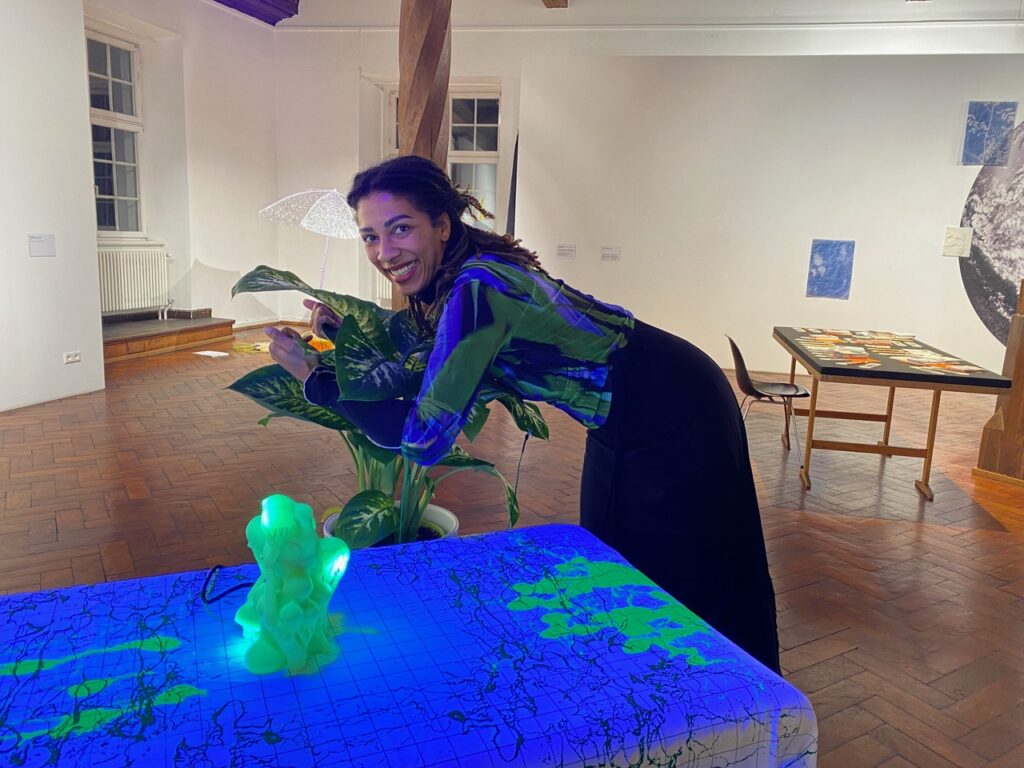
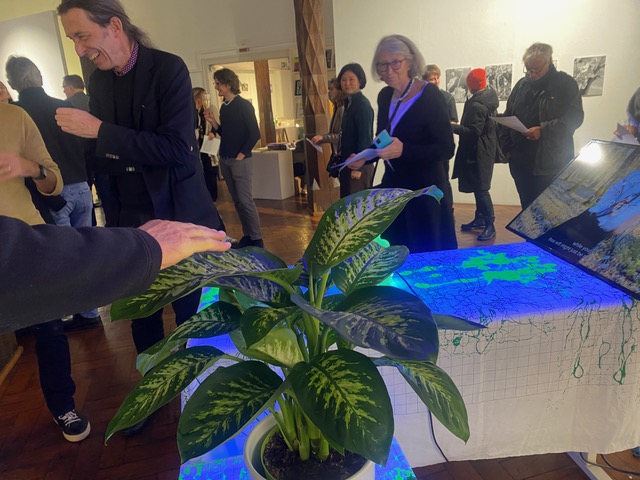
Eine Topfpflanze vertritt in dieser Installation die Welt der Pflanzen. Es ist bekannt, dass Pflanzen auf Berührung reagieren – häufig mit Stress oder Abwehrreaktionen, weil sie Fressfeinde erwarten müssen. Andererseits bewegt auch der sanfte Wind, der für Bestäubung und Vermehrung sorgt, die Blätter. Diese Pflanze darf von Besucher*innen berührt werden, denn sie ist die Berührungsstelle zum Spiel. In der Folge illuminiert UV-Licht ein Muster auf dem Stoff – ein in der Neurowissenschaft routinemäßig verwendeter Farbstoff leuchtet auf.
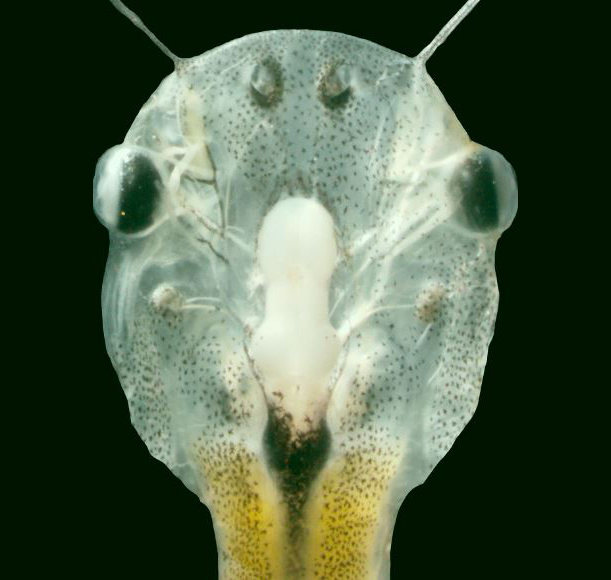
Tadpole Lamp TnX to Stefan MaierTnx to #Vanessa Opoku for playing!Tadpole, Clawed Frog (Xenopus leavis)Installation View Kunstverein Ulm TnX2 #Künstlerische TatsachenOpening Performance 7th Dec #Kunstverein UlmPlant Controller TnX to Georg Luif
“Alexa Fluor 488” wird dafür verwendet, Nervenzellen anzufärben und bildet hier Kaulquappen-Nervenzellen ab. In einem wissenschaftlichen Experiment konnten einzellige Algen Gehirnareale von Kaulquappe des Krallenfrosches (Xenopus laevis) durch Photosynthese von innen mit Sauerstoff versorgen, wenn dem Kaulquappengehirn der Sauerstoff von außen entzogen wurde. Die Algen (Chlamydomonas renhardtii) waren durch Injizieren in das Gefäßsystem zu inneren Mitbewohnerinnen der Kaulquappen gemacht worden. Das Berühren der Pflanze und Auslösen des UV-Lichts in dieser Installation leuchtet die Möglichkeitsräume von “Photosymbiose” aus, die auch menschliches Gewebe mit Sauerstoff versorgen könnte. Die forschende Künstlerin Jahrmann gestaltet und druckt, durch sanftes Streicheln auf dem Stoff, die Nervenzellen als Stoffmuster.
Der Spieltrailer ist eingebettet in ein Setting, das an medizinische Untersuchungen erinnert. Zum einen verbindet Margarete Jahrmann damit ein Ausgeliefertsein. Zum anderen nutzen die Künstlerin und der Neurowissenschaftler Glasauer neurologische Untersuchungen für ihre Forschung zu alternativen Zielen und Belohnungskonzepten im Medium Spiel. Die meist unhinterfragten Mechanismen des Sammelns und Eroberns (collect and conquer) spiegeln unsere westliche Lebensweise auf dem Planeten und reproduzieren sie. Um andere Formen des Zusammenlebens erfahrbar zu machen, sind alternative Spielkonzepte wie “Multiperspectivity” wichtige Räume des Experimentierens und Lernens.