autonomous rovers · charging station · paint · live video · 2026
Angewandte Festival, 1- 4 July 2026 · University of Applied Arts Vienna
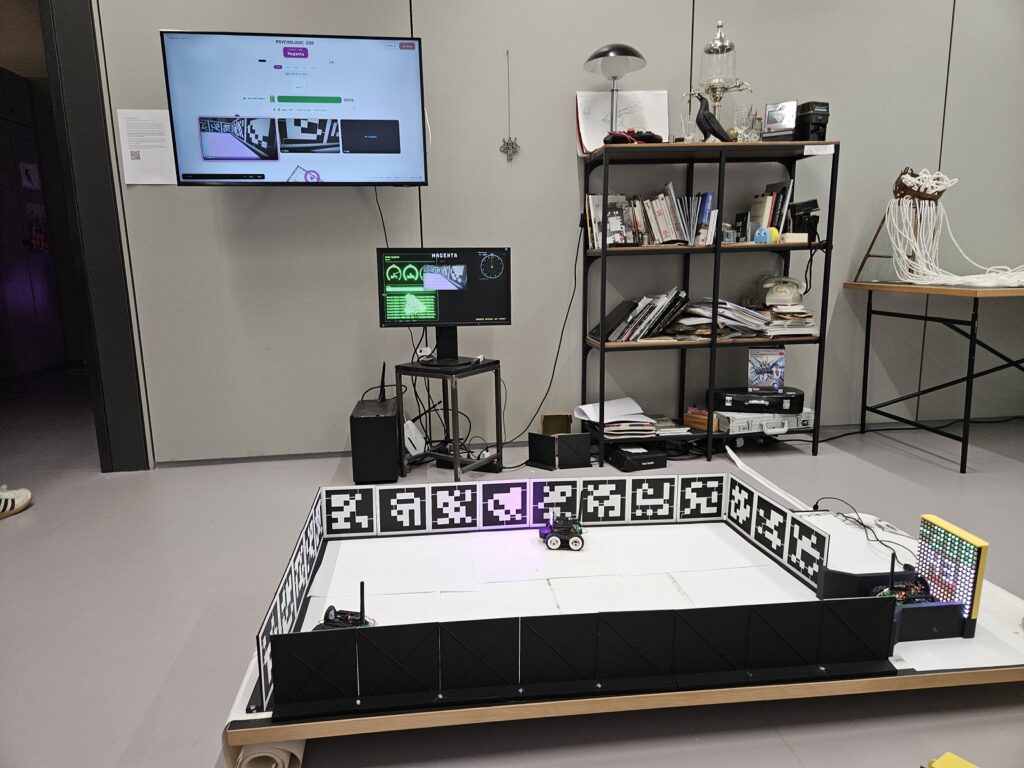
Three small robots share a single arena, and a single charging station. They move on their own- no one drives them – taking turns, one at a time, like players around a table. Each carries a limited battery and a ring of light; each depends on the same power it cannot hold for long. As a battery drains, its light slows and dims. When a robot runs out, it stops. There is only one way to keep going: to share the station, to share what little there is, and to give way.
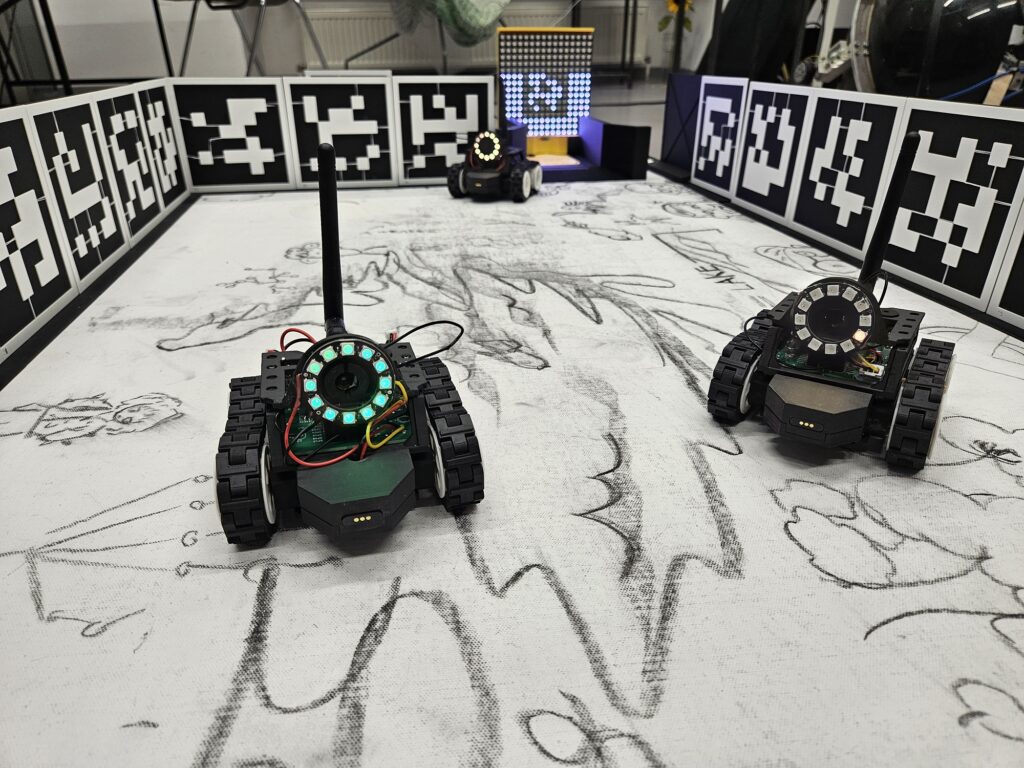
Watch, and you will see them speak. Their light and sound are a language : a robot calls when its power runs low, answers when another passes, and yields its place at the charger so a weaker one can survive. Nothing here is a race. In place of the familiar game of winning, conquering, and accumulating, this is a game of communication, empathy, and care: the mechanics of a viable future, where the aim is not to defeat the others but to keep each other alive.
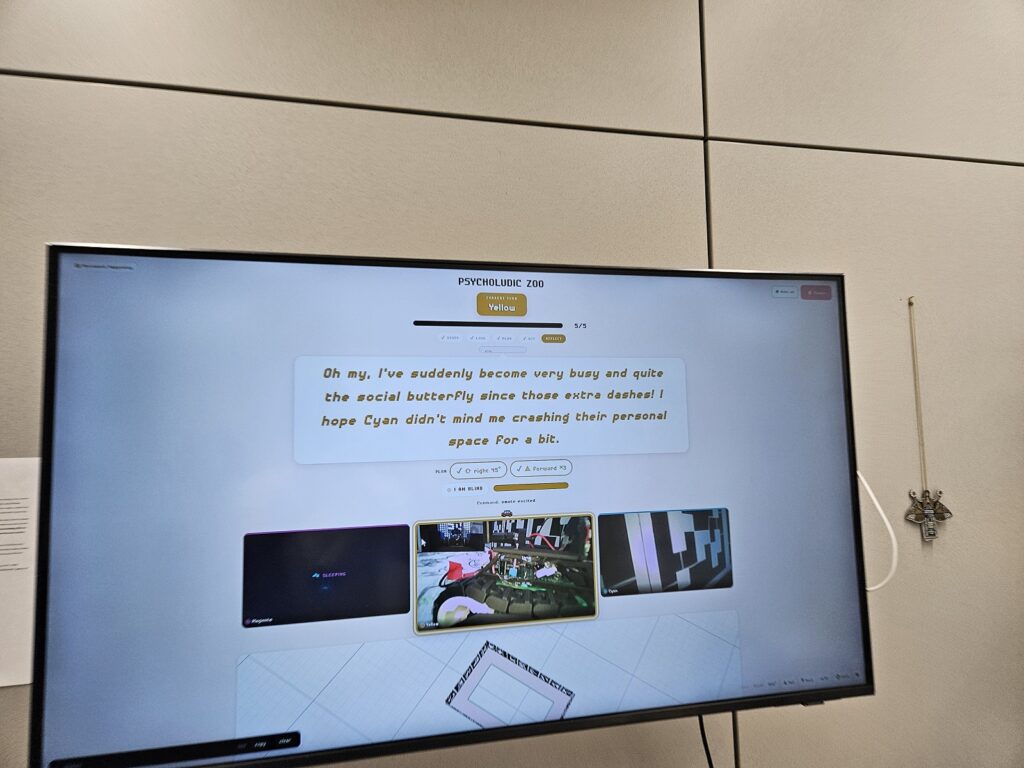
The choices behind those exchanges are made by a small language model running locally on the robots’ behalf. We prompted it to be empathic: to weigh the others needs and to negotiate rather than compete. Beside the arena, a screen let visitors read the negotiation as it unfolded, next to a live image from each robot’s own eye.
The lower a robot’s charge fell, the more its language soured: quick to complain about the others, to argue that its own need came first. Scarcity changed the system emergently.
At a set hour each day, the robots performed. They rolled through wet paint and draged their traces across the floor, and these sheets are kept as artifact. Where the lines cross, two robots met; where a line simply stops, one ran out of power. The painting is the collective memory of a small society- an honest record of how it spent its energy, and of who shared.
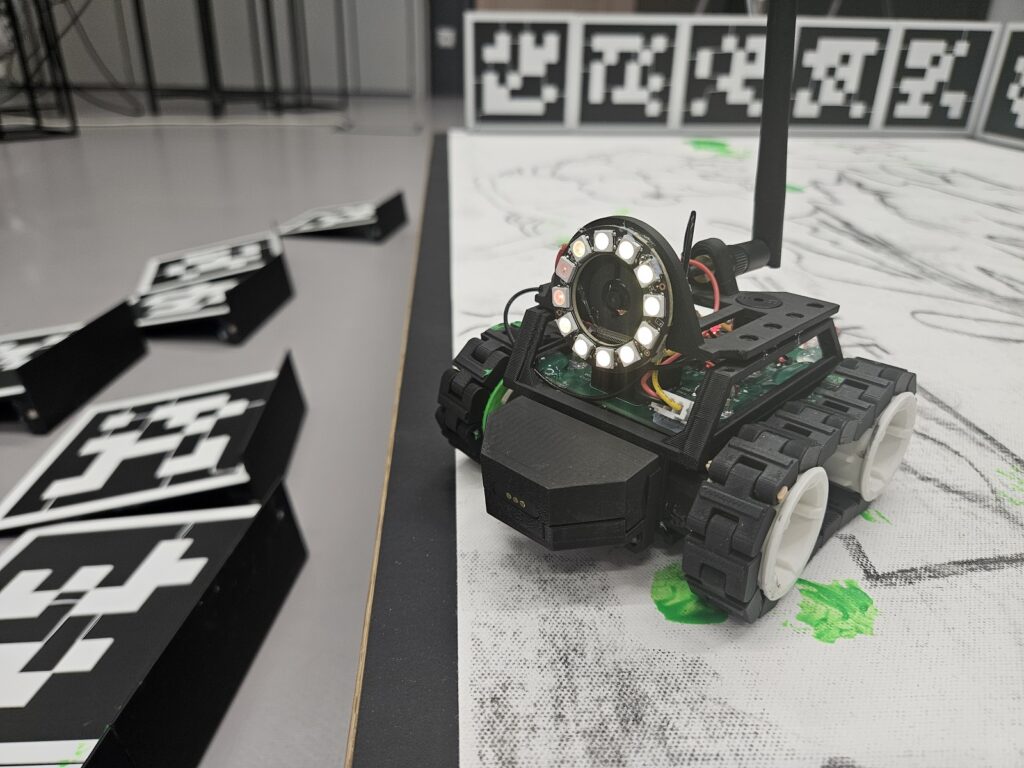
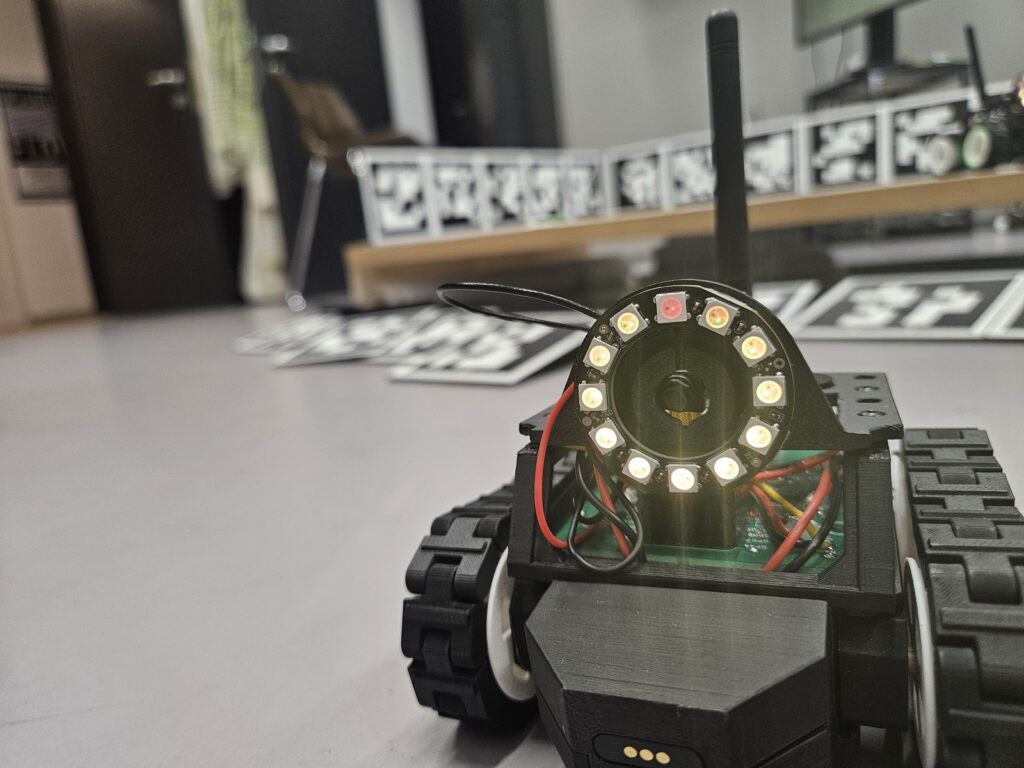
Rover development: Georg Luif & The Psycho-Ludic Research Group (PI Prof. Margarete Jahrmann).